Residential Air Conditioning for Listed Buildings: All You Need to Know
Installing residential air conditioning in a listed property is rarely straightforward. While modern homes can be adapted with relative ease, heritage properties require a far more considered approach. Thick masonry walls, protected façades, restricted roof access and strict preservation rules can all make cooling a listed building feel like a complex challenge.
Yet comfort, especially during increasingly warm UK summers, remains essential. The key is finding the right balance between modern climate control, architectural preservation, and full legal compliance. With careful planning and specialist expertise, it’s entirely possible to introduce discreet, energy-efficient air conditioning without compromising a property’s historic character.
At Calibre, we help homeowners navigate this balance every day, designing tailored residential air conditioning systems that respect period features while delivering reliable, effective cooling.
What makes listed buildings unique
A listed building is a property recognised for its special architectural or historic interest and placed on the National Heritage List for England. In the UK, buildings are classified as:
- Grade I: Buildings of exceptional interest
- Grade II*: Particularly important buildings of more than special interest
- Grade II: Buildings of special interest
These designations carry legal protection. Any work that affects the character or appearance of the property, internally or externally, may require Listed Building Consent and sometimes planning permission.
Listed homes often feature elements that complicate air conditioning installation, including:
- Solid stone or brick walls with no cavity space
- Ornate plasterwork, cornicing, or ceiling roses
- Limited loft or roof void access
- Restrictions on external alterations
- Original sash windows and minimal insulation
Every modification must be approached with sensitivity to the building’s historic fabric.
1-4-3.jpg)
Common air conditioning challenges in listed homes
Installing residential air conditioning in a listed property comes with a unique set of constraints. Unlike modern homes, where systems can be integrated with minimal concern for structural impact, heritage buildings demand careful planning and specialist design.
Limited structural alterations allowed
One of the biggest challenges is the restriction on structural change. Listed Building Consent is often required for any work that could affect the character of the property, including drilling through original masonry, altering ceilings, or modifying historic joinery.
Some stone walls, decorative plasterwork, and protected architectural features mean that even small penetrations for pipework must be carefully considered. Installations must often be reversible and avoid permanent alteration to the building’s historic fabric.
Aesthetic concerns: Keeping units hidden or discreet
Visual impact is a major concern in listed homes. Standard wall-mounted air conditioning units can look out of place against period interiors, ornate cornicing, or traditional décor.
Homeowners and conservation officers typically expect:
- Minimal visibility of indoor units
- No prominent external condensers on principal elevations
- Concealed trunking and pipework
- Sympathetic positioning that preserves room symmetry
Achieving this often requires creative placement, colour matching, or the use of low-profile or concealed systems.
Difficulty in routing pipework or placing condensers
Routing refrigerant pipework through thick masonry walls or protected interior spaces can be complex. Many listed buildings lack cavity walls, ceiling voids, or accessible service routes, making concealment more challenging.
External condenser placement is another common obstacle. Residential air conditioning units may not be permitted on street-facing façades or visible rooflines. In some cases, homeowners must explore alternatives such as rear garden placement, courtyard positioning, or water-cooled systems where external units are restricted.
Energy efficiency and insulation issues
Older listed properties were not built with modern insulation standards in mind. Solid walls, single-glazed sash windows, and draught-prone construction can reduce overall thermal efficiency.
When installing residential air conditioning systems, careful sizing remains important to ensure effective cooling. Complementing AC installation with discreet insulation upgrades or draught reduction measures can significantly enhance both performance and energy efficiency.
Successfully addressing these challenges requires both technical expertise and sensitivity to the building’s heritage, ensuring comfort is achieved without compromising character or compliance.

Best air conditioning solutions for listed buildings
Selecting the right residential air conditioning system for a listed property is all about minimising impact while maximising comfort. The most suitable solutions are those that require limited structural alteration, offer discreet installation options, and meet planning requirements.
Invisible air terminals and concealed air distribution
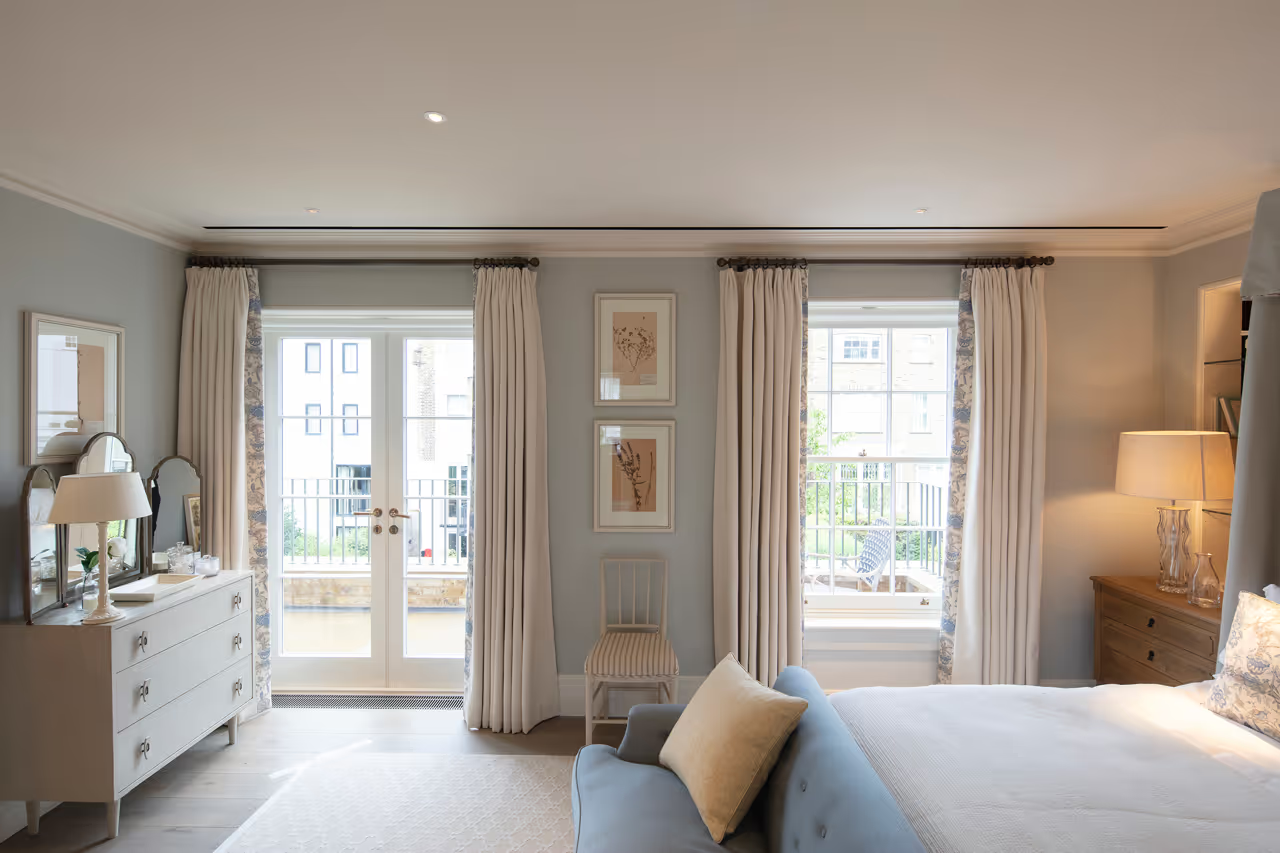
In listed and heritage homes, preserving clean sightlines and protecting original features is often more important than the system type itself. Invisible air terminals, designed on a case-by-case basis, allow conditioned air to be delivered discreetly through low-profile grilles or concealed openings that blend seamlessly into ceilings, walls, or bespoke joinery.
Unlike standard wall-mounted units, these terminals are integrated with concealed fan coil units and carefully routed services, ensuring effective and even air distribution without compromising period interiors. Achieving this requires detailed design by experienced AC engineers, who assess void availability, duct routes, and terminal placement to align sympathetically with the building’s layout and architectural details.
At a property in Regent’s Park, Calibre delivered fully integrated cooling where invisible air terminals and coordinated concealed services preserved the architectural character of the listed residence, providing comfort while maintaining clean, unobtrusive interior lines.
Low-profile or concealed indoor units
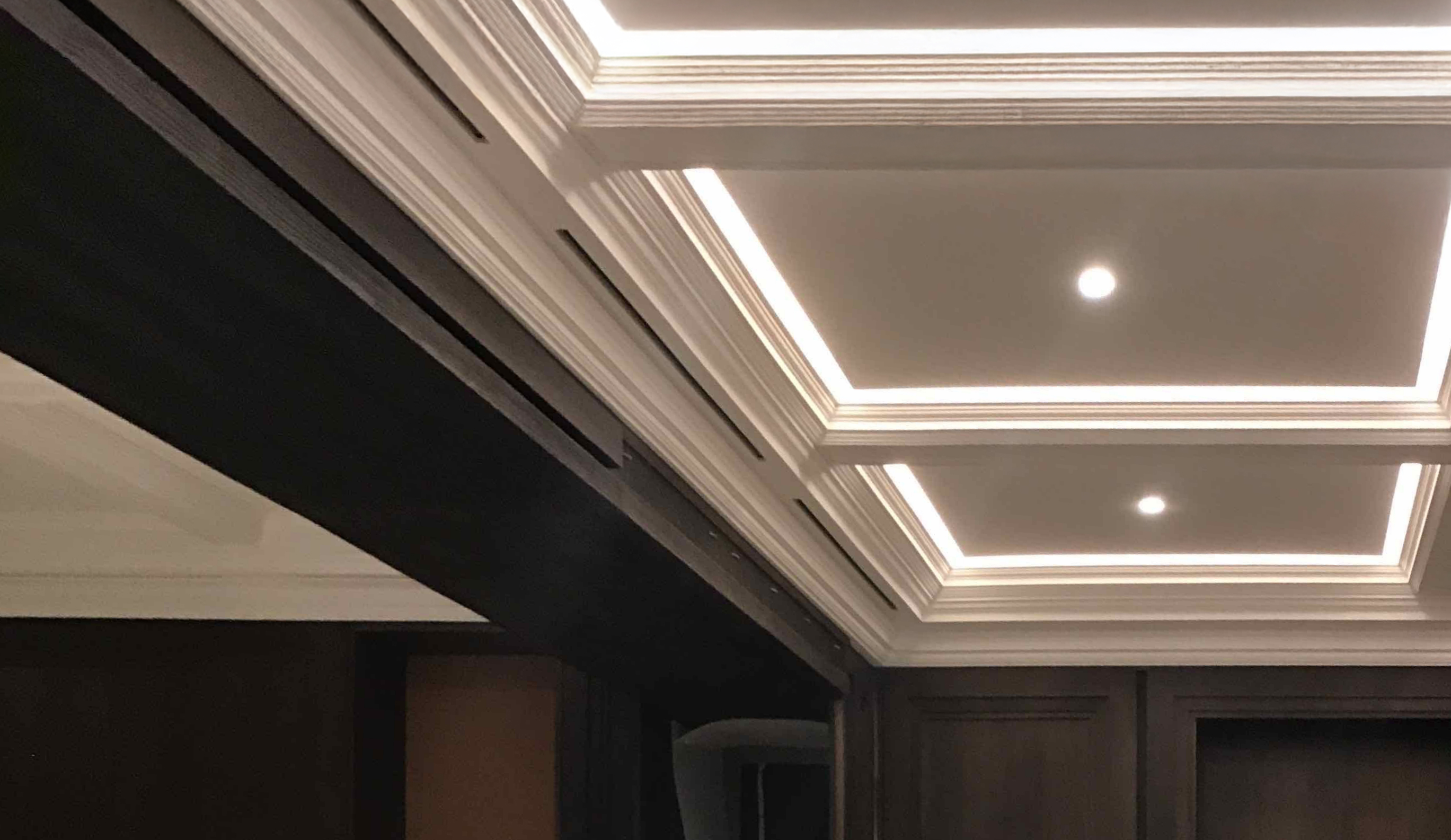
For properties where aesthetics are paramount, bespoke concealed ducted ‘chassis-style’ units provide a discreet solution. These units can be integrated within ceiling voids, eaves, wall buildups, or bespoke joinery to minimise visual impact while delivering effective climate control.
Such systems required detailed design by an experienced AC engineer, who calculates duty, heat loads, and airflow specific to the property and the occupants’ requirements. Every component is coordinated as part of a fully engineered system to ensure seamless operation without compromising the building’s interior or heritage.
At a property in Notting Hill, indoor units were carefully integrated into bespoke joinery to maintain clean interior lines, while at a home in Kensington hidden diffusers and fully coordinated services within the ceiling void ensured seamless climate control throughout the property.
Energy efficiency and sustainability
Modern residential air conditioning technology allows listed homes to enjoy comfortable, consistent temperatures without excessive energy use. Key benefits include:
- Smart controls and zoning: Maintain consistent temperatures, optimise efficiency, and allow different rooms to be controlled independently.
- Reduced energy bills and carbon footprint: Upgrading from older systems can significantly lower electricity consumption and emissions.
- Government incentives and grants: Certain energy-efficient technologies, such as heat pumps or high-efficiency AC systems, may qualify for funding or tax benefits.
By combining modern technology with careful design, listed properties can achieve high-performance climate control without compromising energy efficiency or sustainability.
Balancing heritage and home comfort
Owning a listed property doesn’t mean sacrificing modern comfort. With the right approach, even the most historically significant homes can support efficient, discreet climate control without compromising their architectural character.
Success begins with careful planning, considering your cooling and heating needs before any work begins to avoid costly alterations later. Working with specialist installers ensures that systems are designed to meet both performance goals and listed building regulations. By prioritising discretion through thoughtful placement, concealed units, and designs that complement period features, modern air conditioning can blend seamlessly with the home’s historic charm.
With heritage-sensitive planning and expert installation, a listed property can enjoy the benefits of modern residential air conditioning while preserving its unique character.
Contact Calibre for a bespoke air conditioning solution for a listed property.

YOUR HOME.YOUR TEMPERATURE.
Find out how we can help you achieve the perfect temperature in your home.