
How to Hide Air Conditioning in Modern London Homes
London’s climatic shifts and increasingly design-conscious interiors mean that air conditioning is no longer just a functional convenience. It’s an integral part of how a home feels, looks, and performs. Many still associate it with bulky wall-mounted units or intrusive ceiling grilles, a compromise between comfort and aesthetics. In many London homes, air conditioning can still feel like a visual compromise. Effective, but at odds with carefully considered interiors.
In reality, modern systems can blend seamlessly with a home’s design, proving that effective cooling doesn’t have to compromise aesthetic harmony. Concealed air conditioning offers a different approach. Rather than drawing attention to equipment, it allows climate control to sit quietly within the background of the home.
Concealed air conditioning is not simply about hiding equipment, it is a design-led approach where the system is planned from the outset to sit discreetly within the architecture of the home, with airflow, access, and performance fully considered.
In this context, concealed air conditioning offers a compelling solution: technically sophisticated climate control that quietly disappears into the background, allowing interiors to remain uncluttered and true to their design intent. Whether working within the clean lines of a contemporary London flat or the timeless detailing of a period property, this approach ensures comfort without compromise.
In this article, we explore how modern air conditioning can be integrated discreetly and why this matters for homes where every visual detail counts.
Why visible air conditioning doesn’t suit many London homes
In London, a significant proportion of homes are owned by high-net-worth individuals, where residences are not just functional spaces but private, highly personal assets. Many properties are historic, heritage, or listed buildings, and even contemporary apartments often carry bespoke architectural features. In these contexts, retrofitted wall-mounted units or large grilles can feel intrusive, clashing with both the home’s character and owner’s vision. Maintaining aesthetic harmony while introducing modern comfort becomes a delicate balancing act.
For design-conscious homeowners, the presence of a bulky indoor unit or conspicuous grille can feel like an unnecessary visual distraction, out of step with the home’s overall aesthetic. In period properties or listed buildings, external condensers can also present planning challenges, where considerations such as preserving façades, controlling noise, and meeting sustainability requirements must all be carefully balanced.
Beyond aesthetics, visible units can create acoustic and spatial compromises, drawing attention to what should be an unobtrusive element of the home. These constraints make concealed air conditioning systems increasingly popular, offering efficient climate control with minimal impact on interiors.
What concealed air conditioning actually means
Concealed air conditioning is not simply a standard system hidden as neatly as possible. It is designed from the outset to integrate with the fabric of the property, with equipment locations, service routes, and air distribution considered alongside the architecture and interior design.
In design-led London homes, the objective is not just to install air conditioning, but to ensure it supports the overall scheme rather than competing with it.

Ways to hide air conditioning in a modern home
Creating a cool, comfortable living environment shouldn’t come at the expense of aesthetics. Modern technology makes it possible to completely conceal air conditioning within the fabric of the home, hidden in eaves, tucked into otherwise unused voids, or even integrated into bespoke joinery.
The result is a system that works quietly in the background, tailored to your needs for sound, control, and comfort, without ever competing with the design of the space. Achieving this level of integration, however, depends on early coordination and specialist design expertise.
1. Fully concealed ducted systems
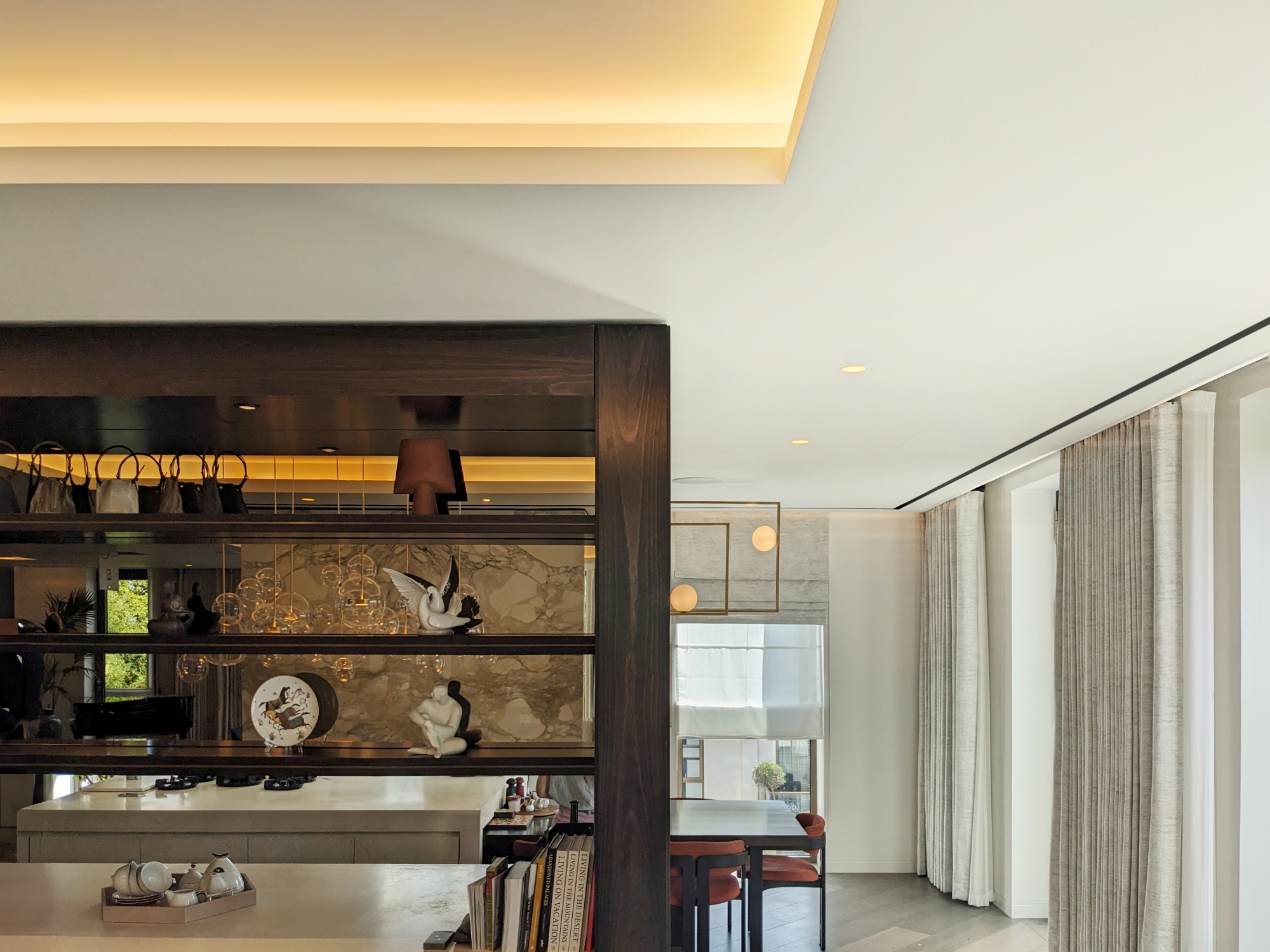
Fully concealed ducted systems are the backbone of modern luxury air conditioning and don’t rely on any one type of space. While ceiling voids are often used, these systems can be tucked into almost any “dead” space, wall eaves, floor voids, or even purpose-designed joinery, when considered early in the design process. Conditioned air is delivered into rooms through carefully designed openings or air terminals, such as architectural features, shadow gap details, or high-level surface openings that remain out of sight, preserving uninterrupted sightlines and the overall aesthetic.
This approach works particularly well in open-plan living spaces or architecturally sensitive homes, allowing air to circulate efficiently without disrupting the overall design.
2. Integrating units within bespoke joinery
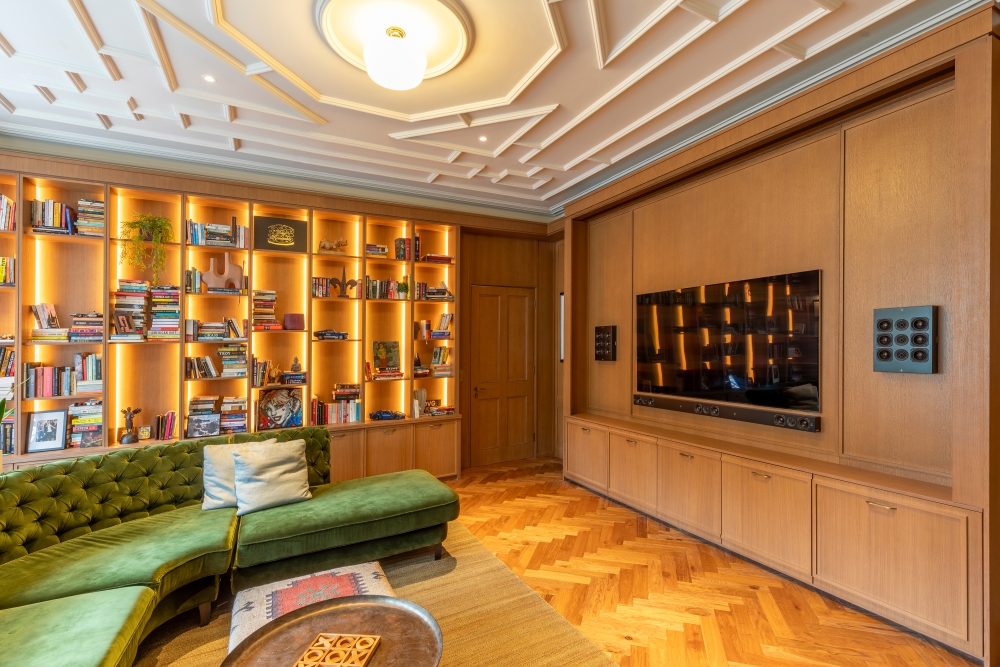
In projects where architectural joinery plays a central role, indoor fan coil units and air terminals can be concealed within custom cabinetry, wardrobes, or media walls.
For example, in the Hampstead I townhouse, units were concealed in TV joinery and bespoke cabinets, with air delivered through subtle slots, keeping the interior clean and uninterrupted while ensuring efficient climate control.
3. Strategic condenser placement and acoustic solutions
Hiding air conditioning isn’t just about indoor aesthetics. External condensers or outdoor units can also be discreetly located, such as in lightwells, rear gardens, or behind acoustic screens.
This ensures the exterior façades of London properties remain visually uninterrupted and compliant with planning or conservation requirements.
Planning considerations for concealed air conditioning in London
Successfully concealing air conditioning in a London property involves more than aesthetics; it requires specialist input from the outset. The location of equipment, airflow strategy, acoustic expectations, service routes, and maintenance access all need to be resolved together rather than retrospectively.
When designing concealed air conditioning, specialist consider everything from solar gain and airflow to condensate drainage and long-term servicing.
Acoustics are an important consideration, but preferences vary from home to home. Some homeowners prioritise near-silent operation, while others are comfortable with a degree of background sound. A well-designed system reflects these preferences.
Building constraints are another factor: listed properties, conservation areas, and flats may limit visible alterations or the placement of external condensers. Early coordination between architects, interior designers, and specialised AC designers, such as Calibre, ensures the system integrates seamlessly without compromising design or compliance.
For a full breakdown of planning requirements and regulatory considerations in London, see our dedicated article here.
The benefits of concealed air conditioning
Concealed air conditioning delivers comfort without compromise. By integrating units into ceilings or bespoke joinery, homeowners can enjoy cooling and heating that supports the home’s interior design rather than interrupting it.
Key advantages include:
- Seamless interiors: No wall-mounted units or visible grilles interrupting an otherwise highly curated interior aesthetic.
- Flexible zoning and control: Rooms can be cooled or heated individually, optimising energy use and personal comfort. Modern systems also integrate with smart controls, allowing homeowners to manage temperature and energy use with ease.
- Enhanced property value: Homes with air conditioning often command higher prices and sell faster than comparable properties without it, making discreet climate control a tangible investment in both comfort and market appeal.
Designing a truly invisible system
Achieving an air conditioning system that disappears entirely requires careful coordination at the earliest stage of the project. The most successful outcomes are rarely the result of a standardised approach, but of solutions tailored to the specific property.
Every property is unique, and a specialist designer carefully considers pipework routes, unit placement, control strategy, and other technical and design factors. These decisions are guided by the building’s architecture, ceiling heights, interior finishes, and the homeowner’s personal preferences. This ensures a system that performs flawlessly while remaining discreet and fully in harmony with the home’s design.
Key considerations include:
- Strategic placement: Units can be concealed in a variety of locations, such as ceiling voids, wall eaves, or bespoke joinery, without affecting airflow, which is determined by the ductwork design. This flexibility allows the system to remain out of sight while performing efficiently.
- Discreet air outlets: Conditioned air can be delivered through openings carefully integrated into the architecture, such as high-level vents, shadow-gap details, or other subtle features that keep the system out of sight while maintaining effective airflow.
- Collaborative planning: Early collaboration between architects, interior designers, and specialist AC designers ensures the system integrates seamlessly with the home’s aesthetic and functional requirements.
- Maintenance access: Panels or removable sections should be carefully integrated to allow servicing without compromising the interior design.
When these elements are carefully considered, the result is a system that delivers year-round comfort completely out of sight, allowing London homes to remain both beautifully designed and perfectly climate-controlled.
Is air conditioning right for every home?
Not every property allows for the same level of concealment. Structural constraints, limited service space, or planning restrictions can influence what is possible.
The goal is not to force a single solution into every home, but to identify the most discreet and appropriate strategy for that specific property.
Achieving hidden comfort in your London home
Concealed air conditioning allows London homeowners to enjoy year-round comfort while respecting the character and design of their interiors. Achieving this requires the expertise of specialists who follow a tried-and-tested process, defining every system requirement upfront, from technical constraints to homeowner preferences, so that the design is fully resolved before installation begins.
By approaching climate control in this structured way, all uncertainties are removed, ensuring the system performs efficiently, operates quietly, and integrates into the home without compromising its architectural integrity. For homeowners, architects, and interior designers looking for a discreet, fully considered approach to climate control, working with experienced specialists is essential.
Contact Calibre to discuss your next project and see how a carefully planned, expert-led process can deliver concealed climate control tailored to your London home.

YOUR HOME.YOUR TEMPERATURE.
Find out how we can help you achieve the perfect temperature in your home.